

Le site Internet
Informations sur l’INHA, ses actualités, les domaines et projets de recherche, l’offre de services et les publications de l’INHA.
On going
| Updated on 9 September 2026
Ongoing
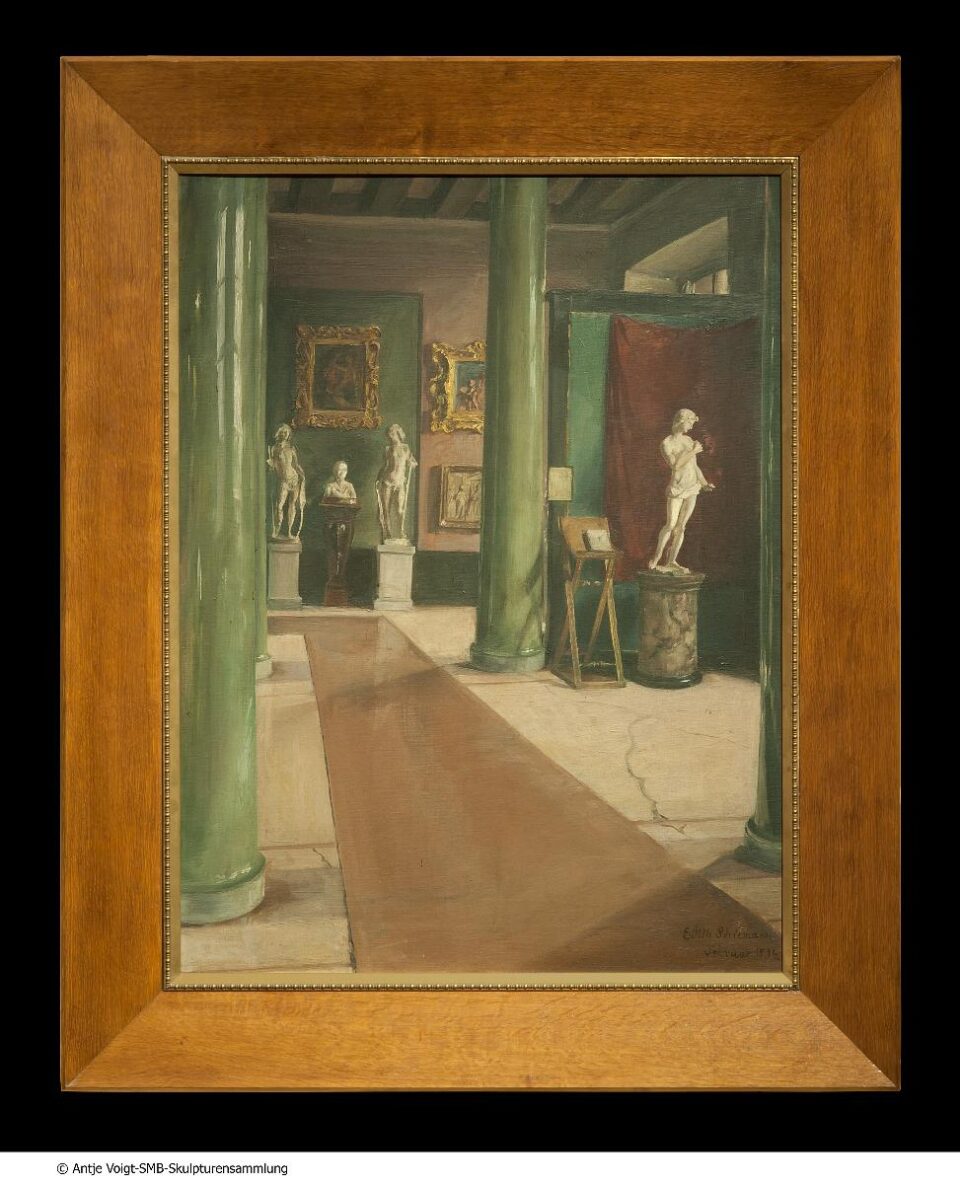
Between 1815 and the early 20th century, Italian sculpture experienced an unprecedented circulation throughout Europe, driven by the restitutions following the Congress of Vienna, the dispersal of collections, and the boom in the art market. This one-day conference aims to analyze the dynamics of this circulation, the formation of public and private collections, and the role of market actors. It will also address issues related to the restoration, reproduction, and dissemination of works, while examining the political, cultural, and heritage dimensions of these transfers. The goal is to integrate approaches from art history, economics, and politics in order to shed light on the transnational heritage status of Italian sculpture.
Between the end of the Napoleonic Wars and the early years of the 20th century, Italian sculpture—from the Middle Ages to the modern era—experienced an unprecedented circulation across Europe. The restitutions following the Congress of Vienna in 1815, the gradual dispersal of numerous aristocratic and ecclesiastical collections in Italy, and the development of the international art market all contributed to a profound transformation in the status and perception of these works.
In the 19th century, many Italian sculptures left their original contexts to become part of private and public collections in France, England, and Germany. This phenomenon occurred during a pivotal period marked by the professionalization of art market participants—dealers, experts, and restorers—and by the gradual formation of specialized museum collections. The acquisitions made by certain curators and art historians played a decisive role in this process, contributing to the redefinition of the canon of Italian sculpture and the promotion of certain regional schools.
At the same time, the development of major European collections gave rise to significant political and cultural debates. The acquisition of Italian works became a matter of national prestige and fueled competition among museums. Thus, the formation of collections of Italian sculpture in European institutions sparked discussions about the place of foreign art within national museums, particularly in the press and scholarly journals. In this context, Italian sculpture also emerged as a key tool in establishing art history as a scientific discipline. Reproduction techniques—casts, tracings, and photographs—as well as the dissemination of works through specialized publications contributed to the development of a body of knowledge with a transnational dimension.
The goal of this conference is to bring together established researchers, as well as doctoral students and postdoctoral researchers, to explore the conditions of this circulation and this process of heritage preservation, by linking the history of collections, the art market, and museum institutions with the political history of heritage.
Several thematic areas will guide the conference’s discussions.
The conference will particularly encourage interdisciplinary approaches that bring together art history, cultural history, and economic and political history. Provenance studies, as well as the analysis of art market and museum archives, will play a central role. Specific attention will also be given to proposals that draw on methods from the digital humanities, particularly for the visualization of provenance data and circulation networks, or for mapping the circulation of Italian sculptures.
Presentations will last 30 minutes and may be delivered in French, Italian, or English.
This call for papers is open to a broad community of specialists—art historians, curators, and conservators—from universities, museums, historic sites, and French and international research institutions. Proposals should include a brief introduction of the presenter (5 to 10 lines), the title and an abstract of the presentation (1 page), along with a brief CV including a list of publications (1 page), and must be submitted by midnight on November 15, 2026, to Giancarla Cilmi (cilmigiancarla@gmail.com) and Marion Boudon-Machuel (marion.boudonmachuel@inha.fr).
Marion Boudon-Machuel (INHA),
Federica Carta (Technische Universität, Berlin),
Giancarla Cilmi (École française de Rome),
Daniele Rivoletti (Institut universitaire de France/Université Clermont Auvergne),
Neville Rowley (Gemäldegalerie, Berlin ; École du Louvre, Paris).
Alicia Adamczak (Institut catholique de Paris),
Kira d’Alburquerque (Victoria and Albert Museum, Londres),
Lionel Arsac (château de Versailles),
Andrea Bacchi (Fondation Federico-Zeri, université de Bologne),
Oriane Beaufils (Villa Ephrussi de Rothschild),
Sarah Betzer (université de Virginie, Charlottesville),
Marc Bormand (musée du Louvre),
Francesco Caglioti (École normale supérieure de Pise),
Valérie Carpentier (musée du Louvre),
Laura Cavazzini (université de Trente),
Anne-Lise Desmas (J. Paul Getty Museum, Los Angeles),
Grégoire Extermann (Haute école spécialisée de la Suisse italienne-SUPSI, université de Genève),
Aldo Galli (université de Trente), Virginie Guffroy (musée du Louvre),
Kelley Helmstutler Di Dio (université du Vermont, Burlington),
Sophie Jugie (musée du Louvre),
Pascal Julien (université Toulouse Jean-Jaurès),
Emmanuel Lamouche (CreAAH – Nantes Université),
Michel Lefftz (université de Namur),
Anne Lepoittevin (Sorbonne Université),
Philippe Malgouyres (musée du Louvre),
Tommaso Mozzati (université de Pérouse),
Sarah Munoz (Université de Lausanne),
Pierre-Hippolyte Pénet (château de Versailles),
Émilie Roffidal (Laboratoire FRAMESPA – Université de Toulouse),
Fabienne Sartre (IRCL – Université de Montpellier Paul-Valéry),
Guilhem Scherf (musée du Louvre), Frits Scholten (Rijksmuseum),
Philippe Sénéchal (université de Picardie Jules-Verne, Amiens),
Magali Théron (TELEMME – Université Aix-Marseille).