

Le site Internet
Informations sur l’INHA, ses actualités, les domaines et projets de recherche, l’offre de services et les publications de l’INHA.
| Updated on 15 April 2026
Closed
Deadline for submitting proposals: April 15, 2026
On the initiative of the Ministry of Culture, from September 2026 to September 2027, the bicentennial of photography will be celebrated, commemorating the date of the first and oldest photographic image taken by Nicéphore Niépce.
In 1989, the 150th anniversary of photography was marked by artistic questions and the medium’s future as an art form, through major exhibitions such as L’Invention d’un regard (The Invention of a View) at the Musée d’Orsay and L’Invention d’un art (The Invention of an Art) at the Centre Georges Pompidou, which marked the entry of photography into art museums and the culmination of a powerful heritage movement, which was also evident in the exhibition 1839. La photographie révélée (1839. Photography Revealed), organized at the National Archives.
The ways of writing the history of photography have changed. Thirty-seven years after 1989, one avenue for reflection is the way in which photography weaves together shared history and individual stories, the way in which it marks our daily experience of the world (our memories, our interiors, our imagination, our representations) and the way in which it manages to elicit narratives, because it is perhaps one of the most widely shared ways of producing images.
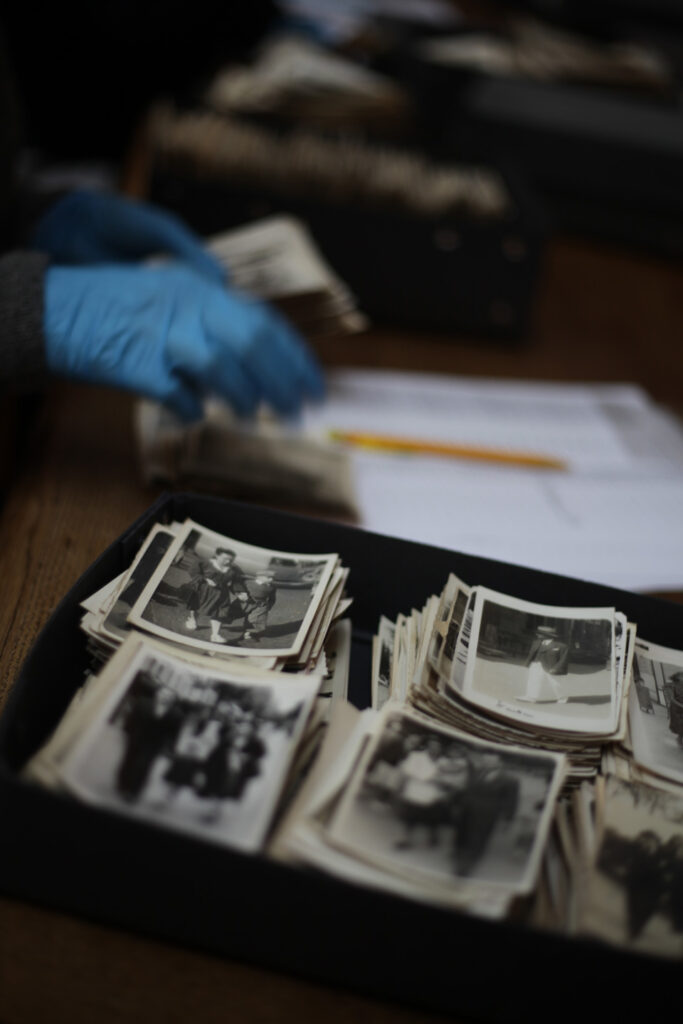
The international symposium “Before Our Eyes: Two Centuries of Photographic Archives” aims to explore this dimension, taking note of the transformations in research on the history of photography and the history or anthropology of photographs.
Languages: French and English
Proposals
Proposals from researchers (junior or senior) and artists from all countries are welcome. Two types of proposals will be accepted:
– Individual proposals for 20-minute presentations
– Proposals for round tables with suggestions for a theme and guests (2 to 3)
Expected format of proposals
300-word proposal (1 page) including the title of the presentation, an abstract, and an image, accompanied by a half-page bio-bibliography.
Schedule
Deadline for submitting proposals: April 15, 2026
Committee response: June 2026
Link to the online call for proposals: https://invisu.cnrs.fr/project/sous-nos-yeux-deux-siecles-darchives-photographiques/
Email address for submitting proposals: bicentenairephotographie@inha.fr
Before our eyes. Two centuries of photographic archives. International symposium organized by the Ministry of Culture as part of the Bicentennial of Photography.
Dates: March 24, 25, and 26, 2027
Location: Mucem, Marseille (France)
Co-organizers and partners: Mucem, InVisu, INHA, Université Paris 1– HiCSA, IUF